


Business Guide to the NY SMART Tech Hub

If you're a business leader in Buffalo, Rochester or Syracuse trying to understand what the NY SMART I-Corridor Tech Hub actually means for your company, this guide is for you.
Billions of dollars in semiconductor and advanced-manufacturing investment are reshaping the economy surrounding our region.
But knowing the investment is coming is very different from knowing how your business can participate. That's where the on-ramps matter.

This week on Elevating Enterprise, we go Inside the I-Corridor with Joe Stefko, President and CEO of OneROC and Regional Innovation Officer for the NY SMART I-Corridor.
We dug into the growing network of programs designed to help businesses enter this new economy—from SCAN and Propel NY, to C3 and Innovation Concierges for commercialization and research resources helping companies prepare for what's ahead.
Stefko put the scale into perspective:
“A decade from now, based on existing operations and only planned investments, one in four semiconductor chips that are produced in the United States are going to be manufactured within 350 miles of where we're sitting.”
One in four American-made chips!
The 350-mile radius includes Micron's massive investment in Central New York, Intel's investment in Ohio and New York's broader semiconductor ecosystem.
And that's precisely what makes the I-Corridor's location so significant.
Buffalo, Rochester and Syracuse are positioned in the middle of one of the largest concentrations of semiconductor manufacturing in the country, and building the supply chain, workforce, research and commercialization infrastructure to capitalize on it.

Three Cities. One Economic Strategy.
Historically, there was often an element of zero-sum thinking along the I-90 Thruway:
If Buffalo wins, Rochester loses. If Rochester wins, Buffalo or Syracuse loses.
Today, the economic competition is much bigger. The combined I-Corridor is competing with technology centers around the world.
The Innovation Concierge within the corridor's research-university network can help companies identify specialized facilities, equipment and expertise, even when the resource they need isn't located in their home market.
A startup in Buffalo might need access to specialized equipment at RIT. A Rochester company might need manufacturing expertise available elsewhere in the corridor. A Syracuse entrepreneur could benefit from a resource located in Buffalo.
The question changes from “What does my city have?” to “What does our corridor have?”
SCAN: Helping Businesses Find Their Place in the Supply Chain
The Supply Chain Activation Network (SCAN) is designed to understand what major institutional buyers need, identify potential suppliers within the corridor and help companies determine whether they are prepared to compete for those opportunities.
Some businesses may already be ready. Others may be closer than they realize.
A company might have a product or capability that makes it a promising supplier but lack the cybersecurity infrastructure required to do business within the industry.
That doesn't necessarily mean the opportunity ends. Technical assistance can help identify the gap and potentially help the company close it.
Part of building a regional supply chain is identifying companies with potential and helping them understand what they need to do next.
C3: Providing Access to Resources You Couldn't Afford Alone
Imagine developing promising technology that is approaching commercialization, but the next stage requires access to a clean room, nanofabrication facility, specialized equipment or university expertise that your company could never afford on its own.
That's where the Commercialization & Collaboration Center (C3) comes in.
Through the corridor's research-university network, companies can be connected to facilities and expertise that can help move promising technologies toward commercialization.
The resource a company needs may be in Rochester, Buffalo or Syracuse.
The point of the corridor is to connect them.
Propel NY: Could Your Existing Business Pivot into This Economy?
Your businesses may already possess equipment, expertise, customers or capabilities that could translate into semiconductor and microelectronics work.
Propel NY, an initiative complementary to the I-Corridor's supply-chain work, helps businesses take a deeper look at their capabilities for entering or expanding within this industry.
How could the company I already own become part of the semiconductor economy?

Inside the I-Corridor is a special business podcast series from Elevating Enterprise on the JazzCast Pros Network.
There is an enormous amount of information surrounding the Tech Hub—federal investments, state investments, workforce programs, supply-chain initiatives, commercialization resources and, yes, a whole lot of acronyms.
Our goal is to translate that ecosystem for the entrepreneurs and professionals trying to answer one question: Where do I fit?
Our conversation with Stefko takes us inside the regional strategy and, more importantly, into the programs being created to help businesses participate.
🎧 Listen to our conversation with OneROC CEO Joe Stefko on Elevating Enterprise
Available on Spotify | Apple Podcasts | Desktop
Inside the I-Corridor is proudly sponsored by The Enterprise Center at PathStone, a Community Development Financial Institution helping entrepreneurs across the I-90 corridor access the capital and support they need to grow.
From fixed-rate business loans up to $80,000 to free technical assistance and year-round virtual training, The Enterprise Center helps small businesses prepare for what's next.
Your on-ramp to funding and business growth.
Learn more at www.theenterprisecenterinc.org

More Resources:
OneROC Learn more about Greater Rochester's regional economic alliance and its work supporting economic growth and collaboration. https://www.oneroc.com/
Greater Rochester Enterprise (GRE) Connect with Rochester-area economic development and semiconductor supply-chain resources. https://rochesterbiz.com/
STEP UP Workforce Development Explore workforce training, talent development and employer resources supporting the semiconductor and advanced manufacturing industries. https://nysmarticorridor.com/talent/
NextCorps Entrepreneurship, manufacturing, technology commercialization and business-growth resources for companies in the Greater Rochester region. https://nextcorps.org/
Monroe Community College — Optical Systems Technology
Learn about MCC's precision optics education and workforce-training opportunities.
NY SMART I-Corridor Opportunity Exchange - In-Person Event October 8, 2026
Meet I-Corridor partners and learn how your business can access funding, technical assistance, workforce solutions, commercialization support and supply-chain opportunities.
You Don't Have to Make Microchips to Participate
It's easy to hear “semiconductor supply chain” and immediately picture highly specialized materials, gases, machinery and components used directly to fabricate a chip.
But pull the camera back and take a look at the bigger picture.
Before a chip can ever be manufactured, a facility has to be built.
Sites have to be prepared. Concrete has to be poured. Steel has to go up.
Equipment and materials have to be transported. Facilities have to be maintained.
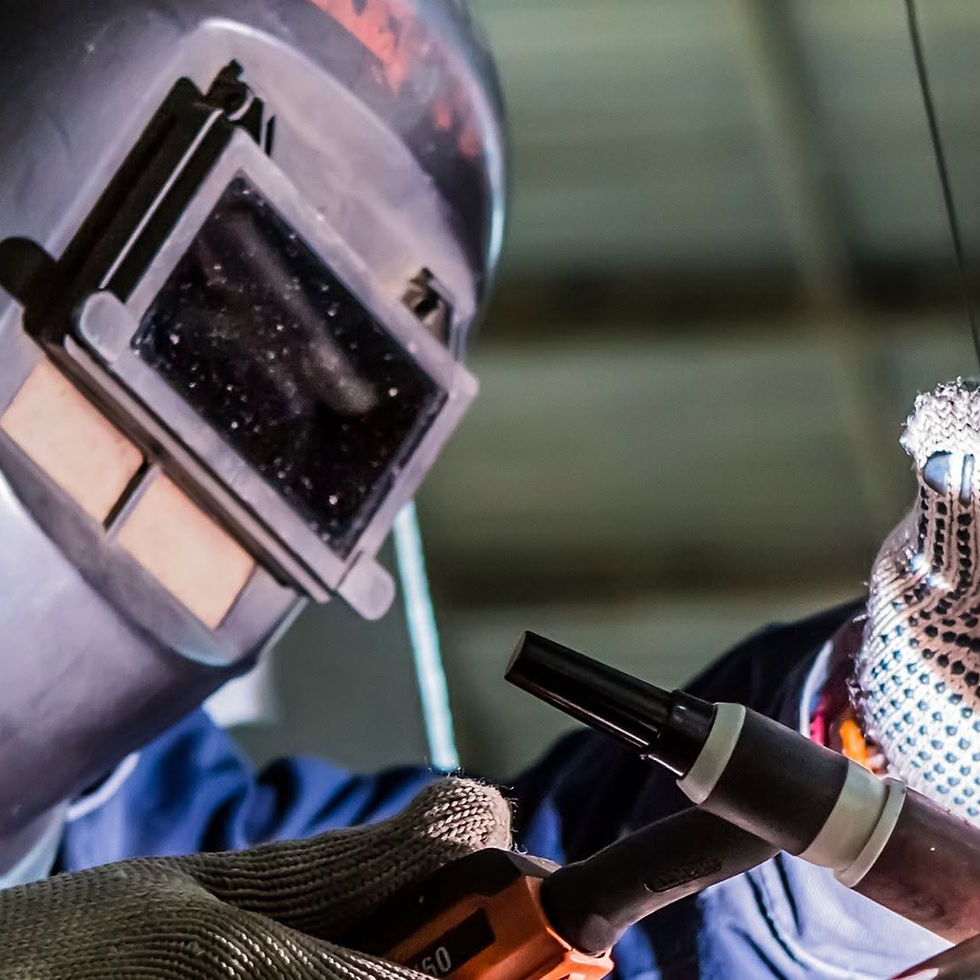
That means some of the most immediate opportunities are in areas such as construction, skilled trades, transportation, logistics and landscaping, in addition to the companies already capable of providing direct semiconductor inputs.
And the opportunity will evolve.
Over the next 24 to 36 months, Stefko expects the demand to increasingly move toward more of the direct inputs required for semiconductor fabrication.
For businesses, that creates a window.
The time to figure out where you fit isn't when the purchase order arrives. It's now.


Comments